Learn the signs your water heater is about to fail, what a new water heater costs, and when Anne Arundel County homeowners should repair or replace.
Signs Your Water Heater Is About to Fail
The most common signs your water heater is about to fail are:
- Age past its expected service life
- Rumbling or popping noises
- Rusty hot water
- Moisture around the base
- Shrinking hot water supply
- Rotten egg smell
- Growing list of repairs
Several signs together, especially on an older tank, usually mean it is time to plan for a new water heater on your schedule instead of during a cold shower or a wet basement.
This guide covers:
- The seven warning signs and what each one means
- Simple checks you can do safely
- How to decide between repair and replacement
- What determines new water heater costs in Anne Arundel County
How Long Does a Water Heater Usually Last?
Age is the starting point for every replacement conversation.
Storage tank and heat pump water heaters typically last about 10 to 15 years, while tankless models can last about 20 years.
Real service life depends on:
- Water quality and mineral content
- How hard the household uses hot water
- Whether the tank has been flushed and inspected
- The condition of the anode rod
- Installation quality and venting
A well-maintained tank can outlast the average. A neglected one can fail early.
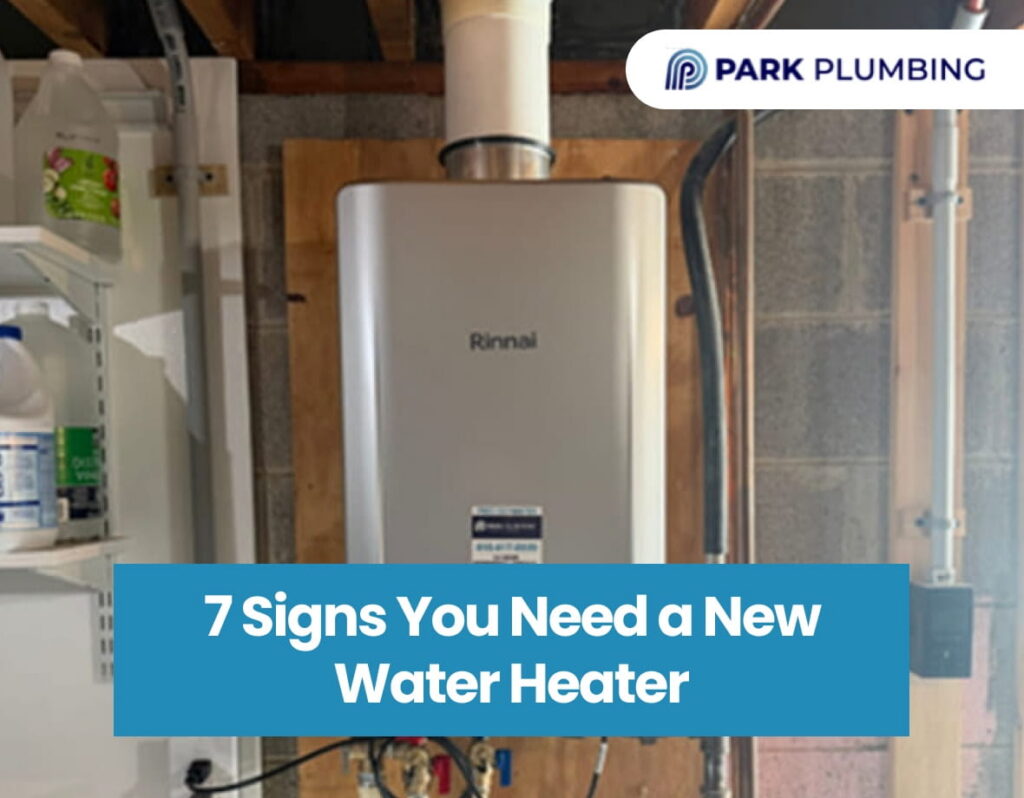
7 Signs You Need a New Water Heater Before It Fails
The Warning Signs at a Glance
- The unit is 10 years old or more
- Rumbling, popping, or banging during heating cycles
- Rusty, brown, or cloudy hot water
- Water, moisture, or rust around the tank
- Hot water runs out faster or never gets hot
- A rotten egg smell from hot water only
- Frequent repairs or rising energy bills
Here is what each sign means and how urgent it is.
1. Your Water Heater Is Past the 10-Year Mark
Age does not mean failure, but it changes the math.
Most tanks carry a label with the manufacture date, or a serial number that encodes it. The format varies by manufacturer, so check the brand’s website or ask your plumber to read it during a visit.
An older unit that still works is a good candidate for an inspection and a replacement plan. That way, your new water heater is chosen carefully, not bought in a rush.
2. Rumbling, Popping, or Banging Noises
Minerals in the water settle at the bottom of the tank over time. The burner or heating element then has to heat through that sediment layer, which causes popping and rumbling.
Early on, a professional flush may help. When noise returns after flushing, or the tank is already older, the sediment has likely shortened its life and stressed the steel.
3. Rusty or Discolored Hot Water
Brown, orange, or cloudy water from the hot side points to corrosion inside the tank or a worn anode rod.
Run the cold tap to compare. If only the hot water is discolored, the water heater is the likely source. If both are discolored, the problem may be in the pipes or the water supply.
A worn anode rod can sometimes be replaced. Rust coming from the tank itself usually cannot be reversed.
4. Water, Moisture, or Rust Around the Tank
This is the most urgent sign on the list.
A drip from a valve, fitting, or connection is often repairable. Water coming from the tank body usually means corrosion has worked through the steel, and a leaking tank cannot be reliably repaired.
Check the floor, the drain pan if you have one, the pipe connections on top, and the seams for puddles, dried water marks, or crusty rust stains. Small leaks tend to grow, and a tank failure can release a lot of water quickly.
5. Less Hot Water, Lukewarm Water, or Temperature Swings
If showers turn cold sooner than they used to, or the temperature jumps around, the cause may be a failing thermostat, a worn heating element, a broken dip tube, or heavy sediment taking up space in the tank.
Many of these parts can be repaired. On an older unit, though, a repair may only buy a short amount of time.
It is also worth asking whether the tank still fits your household. A family that has grown may simply need a larger or different new water heater.
6. A Rotten Egg Smell From the Hot Water
A sulfur smell that appears only at hot taps usually comes from bacteria reacting with the anode rod inside the tank. It is common in homes on private wells.
A flush, a treatment, or a different anode rod often solves it. A smell paired with rust or leaks, however, is one more reason to plan a water heater replacement.
7. Frequent Repairs and Rising Energy Bills
When the same water heater needs service more than once a year, the repair costs start adding up toward the price of a new unit.
Rising energy bills without a change in usage tell a similar story. Sediment and worn parts force an older heater to run longer to deliver the same hot water.
Simple Checks You Can Do Safely
You can learn a lot without tools or opening anything.
- Find the manufacture date on the label
- Look at the floor, drain pan, and pipe connections for water or rust
- Listen to the tank during a heating cycle
- Compare hot and cold water color at the same faucet
- Note how long a hot shower lasts compared with a few months ago
Leave the rest to a licensed plumber.
Do not open the tank, remove the anode rod, adjust the temperature and pressure relief valve, or work on gas lines or electrical parts.
Hot water and pressure can cause serious burns, and gas or electrical work requires a professional.
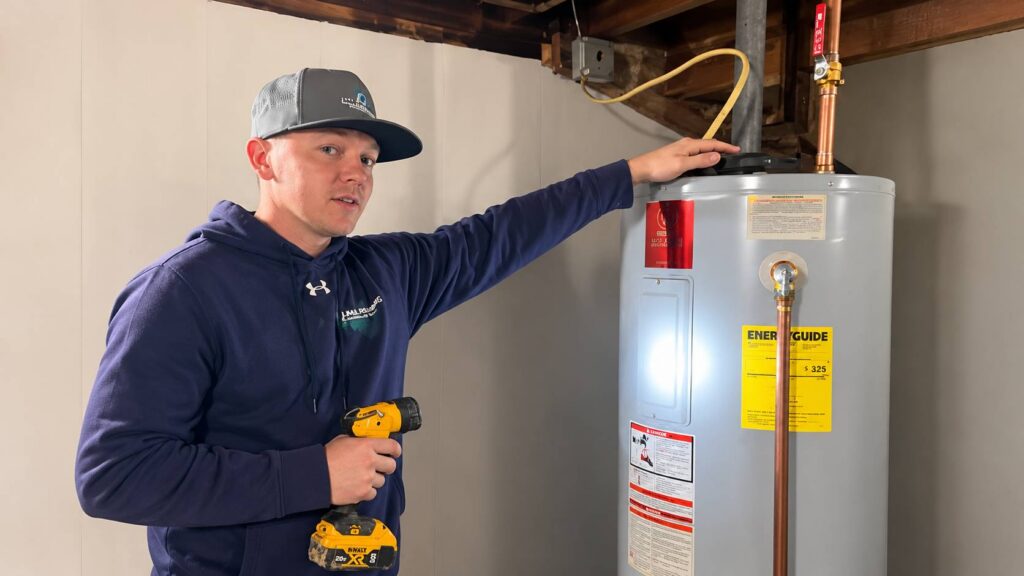
USE IMAGE: water-heater-repair.jpg
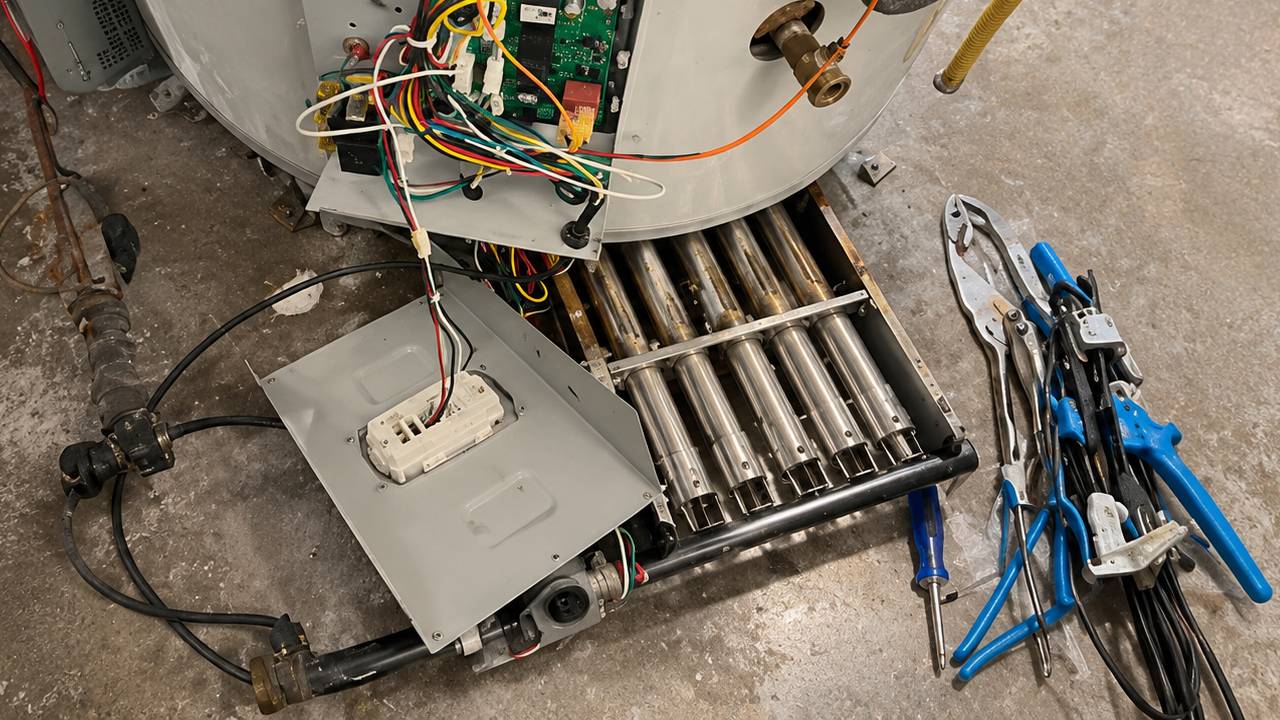
What to Do When You Spot a Warning Sign
Match the response to the signal:
- Age over 10 years with no symptoms: schedule an inspection and start planning
- Noise, odor, or less hot water: book a diagnostic visit soon
- Rusty hot water or a small drip: treat it as a priority visit this week
- Water pooling from the tank: shut off the cold water supply to the heater only if you can identify the valve safely, keep people and pets away from water near electrical equipment, and call for emergency plumbing service
- Smell of gas: leave the home and call your gas utility or 911 from outside
Repair or Replace: How to Decide
Not every warning sign means you need a new water heater.
A water heater repair may be reasonable if:
- The unit is under about 10 years old
- The problem is a thermostat, heating element, valve, or fitting
- The tank itself is sound and dry
- Repairs have been rare
A water heater replacement may be appropriate when:
- Water is leaking from the tank body
- Rust is coming from inside the tank
- The unit is near or past its expected service life
- Repairs keep repeating
- The tank no longer meets your household’s hot water needs
How Much Does a New Water Heater Cost
New water heater cost depends on the type, size, fuel, and the work needed at your home.
A tank water heater typically costs about $600 to $2,500 installed, while a tankless system typically runs about $1,400 to $3,900 installed. Heat pump water heaters generally sit at the higher end of the range.
Your final price depends on factors such as:
- Type: tank, tankless, or heat pump
- Fuel: gas, electric, or a change from one to the other
- Size: tank capacity or tankless flow rate
- Venting: atmospheric or power vent for gas units
- Gas or electrical changes: larger gas lines or a dedicated circuit for some systems
- Code updates: components such as an expansion tank or drain pan, when required
- Permits: when required by your jurisdiction
- Access: a tight closet or crawlspace takes more labor than an open utility room
The most accurate number comes from an on-site look at your current setup. If you are planning a larger project, financing may be available for qualifying customers, subject to approval.
Choosing Your New Water Heater
The right new water heater fits your home, your fuel source, and how your household uses hot water.
- Tank (gas or electric): lower upfront cost and a simple swap in most homes
- Tankless: hot water on demand and a smaller footprint, though it may need gas line or electrical upgrades
- Heat pump: high efficiency for electric homes, but it needs enough surrounding air space and a suitable location
Smaller homes often use 30 to 40 gallons, many families use 40 to 50, and larger households may need 50 gallons or more.
If you are considering going tankless, learn more about tankless water heater installation and conversions.
USE IMAGE: tankless-water-heater.jpg
How to Help Your Water Heater Last Longer
A little maintenance can delay the day you need a new unit:
- Have the tank flushed about once a year to remove sediment
- Have the anode rod checked periodically and replaced when worn
- Keep the thermostat around 120°F unless your plumber recommends otherwise
- Keep the area around the unit clear and dry so leaks are easy to spot
- Add the water heater to your yearly plumbing maintenance visit
Plan Your Water Heater Replacement Before It Fails
Park Plumbing is a local, owner-led company serving Anne Arundel County homeowners with master-plumber experience in gas, electric, and tankless water heaters.
We explain what we find, show you whether repair makes sense, and help you choose the right new water heater if replacement is the better option. Technicians can order parts on-site, and same-day appointments may be available depending on scheduling, location, and parts.
If you have noticed any of the signs your water heater is about to fail, the best time to act is while you still have hot water.
Call Park Plumbing at 410-417-8509 or contact us online for water heater repair and replacement in Severna Park, Annapolis, and the surrounding communities.
Frequently Asked Questions About Signs Your Water Heater Is About to Fail
What is the average lifespan of a hot water heater?
Storage tank water heaters typically last about 10 to 15 years, and tankless models can last about 20 years. Actual service life depends on water quality, usage, installation, and maintenance. A tank that is flushed and inspected regularly tends to last longer than one that is ignored.
How common is it for a water heater to burst?
A sudden, explosive burst is uncommon in a properly installed water heater because the temperature and pressure relief valve is designed to release excess pressure. The more common failure is a corroded tank that starts as a slow leak and can then give way, releasing a large amount of water. That is why moisture around the base should never be ignored, and why the relief valve should never be capped, plugged, or adjusted by a homeowner.
How do I know if I need to replace a hot water heater?
Replacement is usually the right call when the tank itself is leaking, rust is coming from inside the tank, the unit is near or past its expected service life, or repairs keep repeating. If the problem is a thermostat, heating element, or valve on a younger unit, a repair may be reasonable. A plumber can inspect the unit and tell you which situation you have.
What happens before a hot water heater goes out?
Before a water heater fails, homeowners often notice popping or rumbling noises, shorter hot showers, lukewarm or fluctuating temperatures, discolored hot water, or dampness around the base. Gas units may have pilot or burner problems, and electric units may trip their breaker. These changes can build over weeks or months, which gives you time to plan if you catch them early.
What are the first signs of a water heater going bad?
The earliest signs are often subtle: new noises during heating cycles, hot water that runs out a little sooner, or a slight change in water color or smell. They are easy to dismiss, but they usually point to sediment, a worn part, or early corrosion. An inspection at this stage often leads to a simpler fix or a planned replacement instead of an emergency.
What is the average cost to replace a water heater?
National cost guides put a tank water heater at roughly $600 to $2,500 installed and a tankless system at roughly $1,400 to $3,900 installed. Your new water heater cost depends on the type, size, fuel, venting, code requirements, permits, and how easy the unit is to reach. An on-site estimate is the most reliable way to know the price for your home.
Can you still use water if the water heater breaks?
Usually, yes. Cold water still flows to your fixtures when the water heater fails, because the heater only treats the water that passes through it. If the tank is leaking, shut off the cold water supply valve to the heater only if you can identify it safely, and for an electric unit, turn off its breaker if the area is dry. Do not adjust gas lines yourself. Your toilets, cold taps, and outdoor spigots should keep working while you wait for service.
Can a leaking water heater be repaired?
Sometimes. A leak from a drain valve, fitting, or pipe connection can often be repaired. A leak from the storage tank itself normally requires replacement, because a corroded tank cannot be reliably repaired. A plumber can trace the source of the water and tell you which case you have.
Should I replace my water heater before it fails?
If your unit is past the 10-year mark and showing more than one warning sign, planning a replacement before it fails is often the smarter move. A planned replacement gives you time to compare tank, tankless, and heat pump options and avoids the stress, water damage, and limited choices that often come with an emergency.