Older homes in Severna Park and Crownsville have a lot going for them:
- Mature trees
- Larger lots
- Old constructions
What often gets overlooked is the plumbing behind the walls.
If your house was built several decades ago, some of the original pipe, valves, and connections may still be in service, and they age in predictable ways. This guide explains:
- The plumbing problems that show up most often in older Anne Arundel County homes
- What you can safely check yourself in the homes’ plumbing
- When it makes sense to call a licensed plumber
What are the most common plumbing issues in older homes?
The most common issues in older homes are:
- Aging supply pipes
- Corroded shutoff valves
- Worn fixtures and connections
- Low or uneven water pressure
- Drain and sewer line problems
- Outdated or undersized water heaters
Most of these develop slowly, which means a yearly inspection usually catches them before they turn into water damage.
Aging and corroding supply pipes
Supply pipes carry pressurized water throughout your home, so when they weaken, the results can range from a slow stain on the ceiling to a sudden burst.
The pipe material tells you a lot about what to expect.
Galvanized steel
Homes built before the 1960s often used galvanized steel supply lines.
Over time the interior corrodes and mineral scale builds up, which narrows the pipe and restricts flow.
Rust-tinted water when you first open a tap and steadily declining pressure are common signs.
Older copper and fittings
Copper holds up well, but the solder joints and fittings can develop pinhole leaks as they age, especially where water chemistry is aggressive.
A small green or white crust on a copper joint is worth having looked at.
Polybutylene
Some homes built from the late 1970s into the mid 1990s used gray polybutylene supply lines, which are known to become brittle and fail at the fittings.
If you think you may have polybutylene, an inspection can confirm the material and help you plan.
Signs worth checking:
- Discolored or rusty water, particularly first thing in the morning
- Pressure that has dropped gradually over the years
- Visible corrosion, crust, or moisture on exposed pipes in the basement or crawlspace
- Stains on ceilings or walls below bathrooms

Corroded or seized shutoff valves in older homes
In an older home, the shutoff valves under sinks and toilets, and the main shutoff where water enters the house, are often original.
Valves that have not been turned in years can seize, drip, or break when you finally need them, which is the worst possible time.
It is worth knowing where your main water shutoff is before an emergency.
In many local homes it sits near the front foundation wall, close to where the water line enters, or by the water meter.
Locate it, note its condition, but do not force a valve that feels stuck.
A valve that will not budge or that weeps when moved should be replaced by a plumber rather than wrestled with.
Worn fixtures, faucets, and connections in old houses
Faucets, toilet components, and the flexible connectors behind them wear out with use.
In an older home you may also be dealing with discontinued fixtures where replacement parts are hard to find.
Common culprits include:
- Dripping faucets caused by worn washers, cartridges, or seals
- Running toilets from a failing flapper or fill valve
- Aging rubber supply hoses on toilets, sinks, and washing machines that can crack and leak
- Loose or corroded connections at appliance hookups
Low or uneven water pressure in older houses
Pressure complaints are common in older homes, and the cause matters.
Sometimes it is mineral buildup inside aging galvanized pipe.
Sometimes it is:
- A partially closed or failing valve
- A clogged aerator
- An issue with a pressure regulator
Because the fixes are very different, it helps to diagnose the source before assuming the worst.
You can rule out simple causes yourself:
- Unscrew a faucet aerator
- Rinse out any grit
- Check that shutoff valves are fully open
If pressure is low throughout the whole house, or if it has been declining for a long time, that pattern points more toward the pipes or a regulator and is worth a professional look.
Slow drains and older sewer lines
Drain and sewer problems are among the most disruptive issues in an older home. On properties with mature trees, which describes a lot of Severna Park and Crownsville lots, roots can work into aging clay or cast iron sewer lines through small cracks and joints. Older cast iron drain lines can also corrode and scale from the inside over the decades.
Warning signs of a larger drain issue:
- Several drains slow at once rather than just one
- Gurgling sounds from drains or toilets
- Recurring clogs that come back soon after being cleared
- Sewage odors indoors or a backup at the lowest drain in the house
Aging or undersized water heaters
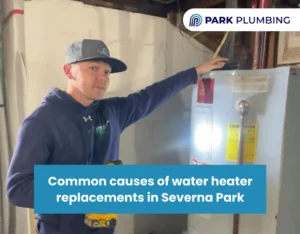
If you bought an older home, there is a fair chance the water heater came with it and its age is a mystery.
Older units run less efficiently and are more prone to sediment buildup, leaks, and inconsistent temperature.
Signs your water heater needs attention:
- Rust-colored hot water or a metallic smell
- Rumbling or popping noises, which often indicate sediment in the tank
- Water that runs out faster than it used to, or never gets fully hot
- Any moisture, drip, or pooling around the base of the unit
Need a same day plumber?
Park Plumbing provides fast, professional plumbing services for leaks, burst pipes, clogged drains, water heater issues, and other common plumbing issues.
Contact us today to schedule service or request an estimate.
Local considerations for Severna Park and Crownsville homeowners
A few things about this part of Anne Arundel County are worth keeping in mind.
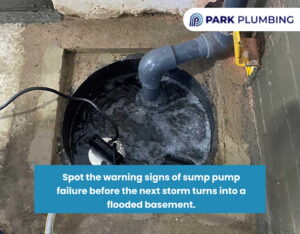
Many homes here have basements, so sump pump condition matters, especially heading into storm season.
A sump pump service check helps confirm the pump actually runs when you need it, though no pump can promise protection in every flooding event.
Maryland winters also bring freeze risk:
- Outdoor faucets
- Hose bibs
- Exposed pipes
These on older homes are common trouble spots when temperatures drop.
Seasonal outdoor-fixture winterization helps prevent cracked lines and the leaks that follow in spring.
What you can check, and when to call a plumber
Plenty of older-home plumbing care is homeowner friendly.
It is reasonable to:
- Locate your main shutoff
- Rinse a clogged aerator
- Keep an eye on exposed pipes and appliance hoses
- Note any change in water color, pressure, or sound
Some things should wait for a licensed plumber.
What NOT to do
- Do not force a stuck valve
- Do not work on a gas line or gas water heater
- Do not disturb a water heater’s temperature
- Do not pressure the relief valve or mix drain chemicals
If water is near electrical equipment, stay clear of it.
When a leak is active and you cannot stop it:
- Shut off the water only if you can safely identify the right valve
- Keep people and pets away from the affected area
- Call for help
Why Severna Park and Crownsville homeowners call Park Plumbing
Park Plumbing is a locally owned company led by Ryan Hufnell, a Maryland master plumber and gas fitter serving Anne Arundel County.
Older homes reward experience, because the fix often depends on reading how the whole system was put together over the years.
We diagnose the problem before recommending anything, explain your options in plain language, and help you decide between a sensible repair and a replacement that the condition of the system actually supports.
Same-day appointments may be available depending on location, schedules, the nature of the problem, and parts.
If you are dealing with an active plumbing emergency, call for 24/7 emergency plumbing assistance.
Schedule an inspection for your older home
If your Severna Park or Crownsville home has aging pipes, tired fixtures, or a water heater of unknown age, a plumbing inspection is a smart first step. Contact Park Plumbing to schedule service or request a free estimate.
Frequently asked questions about common plumbing issues in older homes in Severna Park and Crownsville
How do I know if my older home has galvanized pipes?
Galvanized steel pipe has a dull gray finish and, unlike copper, a magnet will stick to it. Homes built before the 1960s are the most likely to have it. Persistent rusty water and slowly declining pressure are common indicators. A plumber can confirm the material and check its condition during an inspection.
Is it worth repiping an older house?
It depends. Repiping may be appropriate when pipes are failing repeatedly, the material is known to be unreliable, or corrosion is widespread. A spot repair may be reasonable when the rest of the system is sound and the failure is isolated. The best option depends on the pipe material, age, condition, and your priorities, which an inspection can help clarify.
Why does my older home have low water pressure?
Common causes include mineral buildup inside aging galvanized pipe, a partially closed or failing valve, clogged aerators, or a pressure regulator problem. Because the fixes differ, it helps to diagnose the source. If low pressure affects the whole house or has declined over years, that points more toward the pipes or regulator.
Do older sewer lines really need to be replaced?
Not always. Some issues, like a root intrusion or a local clog, can be cleared and managed. Others, such as extensive corrosion or collapse in old clay or cast iron, may call for replacement. A camera inspection shows the actual condition so the decision is based on evidence rather than assumption.
How old is too old for a water heater?
There is no single cutoff. Rather than age alone, the deciding factors are condition, efficiency, whether it still meets your household’s hot water needs, and whether the tank itself is leaking. A leak from the tank normally means replacement, while a valve or connection leak can sometimes be repaired. An assessment can tell you where yours stands.