Learn the sump pump warning signs before basement flooding hits your Severna Park or Annapolis home. Know what to check and when to call Park Plumbing.
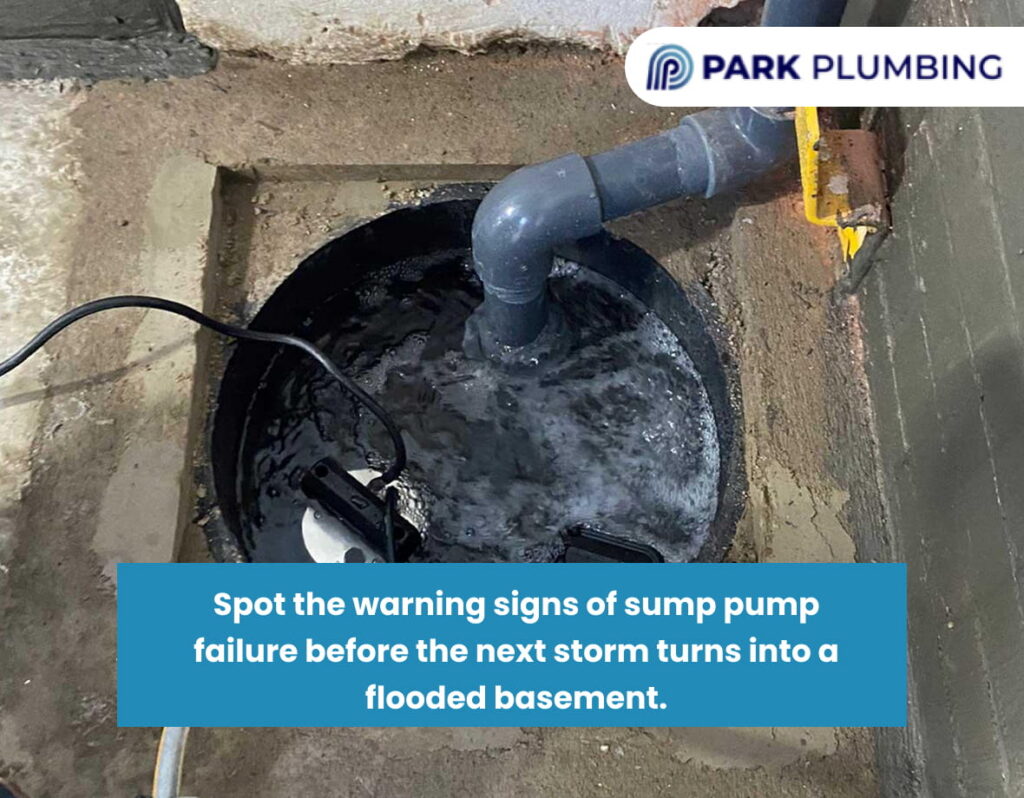
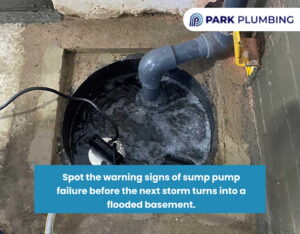
Flooded sump pump
Basement Flooding: Sump Pump Warning Signs
Your sump pump rarely fails without warning.
It usually makes odd noises, runs strangely, or stops responding to water days or weeks before basement flooding begins.
Catch those signals early and you can schedule a simple repair. Miss them and you may be calling for help during the next heavy storm.
This guide covers:
- Warning signs we see most in Anne Arundel County basements
- What you can safely check yourself
- When to bring in a licensed plumber
Why Basement Flooding Risk Is Higher Near the Water
Coastal Maryland weather does half the work.
One strong afternoon storm can saturate the soil around your foundation, and homes near the Severn River or the Chesapeake Bay often sit over a high water table.
In Annapolis, older and historic houses add aging drain tile and stone foundations to the mix. In Severna Park, many lower levels rely on a single sump pump as their only defense.
That is why basement flooding here is usually a when question during storm season, not an if question.
The Warning Signs That Appear Before Basement Flooding
Most failing pumps show at least one of these signals before they quit:
- The pump runs constantly or cycles on and off every few seconds
- Grinding, rattling, or loud vibration during a cycle
- The pump never starts when water fills the pit
- A musty smell or damp air you have not noticed before
- New rust, corrosion, or water stains around the pit
- A discharge line that spills water beside the foundation
- A unit around 7 to 10 years old with no recent service
Here is what each sign means and how urgent it is.
1. Strange Noises During a Cycle
A healthy pump hums. Grinding or rattling usually points to a worn bearing, a loose impeller, or debris caught inside the pump.
Treat a new noise as an early repair window, not background sound.
2. Constant Running or Rapid Cycling
A pump that never rests may be fighting a stuck float switch, an undersized pit, or water entering faster than it can remove.
Rapid on and off cycling, called short cycling, burns out the motor early.
3. A Pump That Will Not Start
If water rises and the pump stays silent, the float switch, the outlet, or the motor may have failed.
This is the riskiest sign on the list, because you usually notice it only after rain is already in the ground.
4. Musty Smells and New Dampness
A musty basement smell often means moisture is entering faster than the pump system can handle, even when the floor still looks dry.
Check corners, baseboards, and the area around the pit for a faint gray moisture line.
5. A Discharge Line That Works Against You
The discharge line carries water away from your home. If it empties beside the foundation, clogs with leaves, or freezes in winter, the pump recycles the same water all day.
Our guide on winter plumbing emergencies covers the frozen discharge problem and how to prevent it.
6. Age, Rust, and a History of Small Repairs
Many sump pumps need replacement after roughly 7 to 10 years of service. An older unit with rust on the basin or a patchwork of fixes is living on borrowed time.
If you do not remember the last inspection, that alone counts as a sign.
A Simple Sump Pump Test You Can Do Safely
You can check the basics without tools.
- Lift the cover
- Shine a flashlight into the pit
- Pour a bucket of water in slowly
- The float should rise and start the pump within seconds
Only run this test when the cover lifts easily and cords and outlets stay dry.
Never reach into the pit or touch electrical parts while water is present.
The bucket test takes two minutes and answers the biggest question in your basement: does the pump actually start?
If the pump hesitates, rattles, or fails the test, schedule sump pump service before the next storm instead of after the next flood.
What to Do When You Spot a Warning Sign
Match the response to the signal:
- Odd noise or strange cycling: book a routine inspection this week
- Failed bucket test: stop relying on the pump during rain and treat the visit as urgent
- Water rising in the basement: move items off the floor and keep people and pets away from standing water near outlets
- Active flooding near electrical equipment: leave the area and call for 24/7 emergency plumbing assistance
A Prevention Routine That Keeps Basements Dry
Prevention is boring, and it works. A simple routine keeps many pumps alive well past their expected years:
- Test the pump with a bucket of water once a season
- Clean the pit and check the float each spring and fall
- Point the discharge line away from the foundation and clear of leaves
- Ask about battery backup before storm season, since outages and heavy rain often arrive together
- Add a professional pump check to your yearly plumbing maintenance visit
Repair or Replacement: How to Decide
Not every warning sign needs a new pump.
A stuck float, a bad check valve, or a clogged line is often a reasonable plumbing repair.
Replacement makes more sense when the motor is failing, the unit is near the end of its service life, or the pump is undersized for the water your lot collects.
Talk to a Same Day Plumber in Maryland Before the Next Storm
Park Plumbing is a local, owner-led company serving Anne Arundel County, and sump pumps are part of our everyday work, from high-capacity installs to emergency motor repairs.
Same-day appointments may be available, and you can call for 24/7 emergency plumbing assistance when water is rising.
The cheapest basement flooding fix is the one you schedule on a dry day.
Call Park Plumbing at 443-273-5754 or contact us online for sump pump service in Severna Park, Annapolis, and the surrounding communities.
Frequently Asked Questions about Sump Pump Warning Signs Before Basement Flooding in Severna Park and Annapolis
Test your pump about once a season, and again before any stretch of heavy rain or storms. Pour a bucket of water slowly into the pit and confirm the float rises and the pump starts within a few seconds. A quick seasonal test is the simplest way to catch a problem while the basement is still dry.
Many sump pumps need replacement after roughly 7 to 10 years, though actual service life depends on how often the pump runs, the quality of the unit, and whether it has been maintained. A pump that works hard through wet seasons may reach the end of its life sooner. If you do not know how old your pump is, an inspection can help you judge where it stands.
Constant running or rapid on and off cycling can point to a stuck float switch, a pit that is too small for the water coming in, a check valve problem, or groundwater entering faster than the pump can remove it. Because short cycling wears the motor out early, it is worth having the cause diagnosed rather than waiting for the pump to fail.
A battery backup is worth considering because power outages and heavy rain often arrive at the same time, which is exactly when your pump needs to run. A backup keeps the pit clear during an outage, but it is not a guarantee against every flood. A plumber can help you weigh whether a backup makes sense for your basement and water-table conditions.
It depends. A stuck float, a bad check valve, or a clogged discharge line is often a reasonable repair. Replacement tends to make more sense when the motor is failing, the unit is near the end of its service life, or the pump is undersized for your lot. An inspection can determine which situation you have before you spend money either way.
Keep people and pets away from standing water near outlets or electrical equipment, and do not wade into water near energized components. Move valuables off the floor if you can do so safely. If water is rising near electrical equipment, leave the area and call for 24/7 emergency plumbing assistance rather than trying to reach the pump yourself.